
Untie the Rope Gets Easier Once You Learn to Pause Before You Pull
A better walkthrough for Untie the Rope, focused on clean reads, outside loops, and the patience that keeps boards solvable.
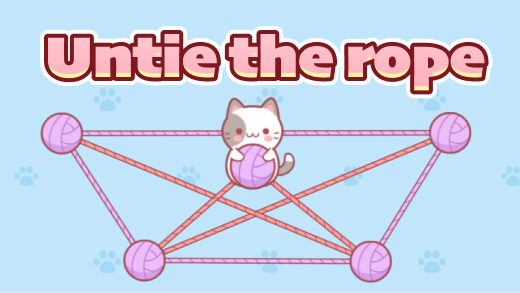
What Untie the rope asks from you
Rope puzzles punish impatience more than they punish ignorance. Untie the rope becomes readable the moment you stop dragging pieces just to feel progress. The first minute matters in Untie the Rope Gets Easier Once You Learn to Pause Before You Pull because most rounds tell you quickly whether you are playing with control or just reacting late.
The right habit is to see which strand is really trapped before you touch anything. That is why simple habits matter so much here. The game does not give you many free recoveries once a run starts drifting.
Start with a clean first habit
Give the whole board one quiet scan. The outer loop or the tight crossing usually tells you where the true problem lives. When the checklist is simple, the next round usually looks cleaner right away.
A calm first look prevents the chain reaction of accidental tangles that makes later fixes harder. A short routine works better than a marathon because you can feel the improvement before the session turns messy.
Read together, the list gives you a short routine you can test right away. That is usually enough to make the next few runs look cleaner.
- Study the board before moving the first strand.
- Free the least entangled path first whenever possible.
- Use restart as a tool, not a confession.
Mistakes that cost easy runs
Most rough sessions in Untie the rope come from rushing before the pattern is clear. That is why the loss often feels sudden even though the setup was already shaky.
A short reset usually fixes more than stubbornly forcing another bad attempt. Once you notice where the round first went crooked, the fix is usually less dramatic than it looked.
These examples all point to the same problem: the round gets messy because the first read was rushed. Clean that up, and the rest of the run usually settles down.
- Dragging the first visible rope without understanding the knot
- Trying to fix three crossings at once
- Staying on a messy board after you already know the opening was wrong
A ten-minute practice routine
One short routine is better than a marathon. You remember the rhythm longer, and the game keeps its charm. When the checklist is simple, the next round usually looks cleaner right away.
Read together, the list gives you a short routine you can test right away. That is usually enough to make the next few runs look cleaner.
- Solve two or three boards slowly with full attention.
- If one board becomes messy, restart early and test a cleaner first move.
- End the session once your eyes stop seeing the crossings clearly.
When to stop and come back later
Untie the rope is satisfying because the answer often looks obvious after you find it. That feeling comes from patience, not from speed. Most bad runs start a moment earlier than they seem to, when one rushed choice leaves no room to recover cleanly.
Short browser sessions suit the game well because each board can stand alone. That is why the loss often feels sudden even though the setup was already shaky.
FAQ
Quick notes for new Untie the rope players. A quick FAQ is most useful when it gives you one or two habits you can test immediately.
If you are new to Untie the Rope Gets Easier Once You Learn to Pause Before You Pull, test one or two of these ideas in a short session first. That tells you more than trying to memorize the full list at once.
- What is the biggest beginner mistake? Moving too fast.
- Should I restart often? Yes, when the opening is clearly wrong.
- Do I need long sessions to improve? No. Careful short boards teach plenty.
- What should I scan first? The crossings that seem to trap multiple paths at once.
Explore on Playgoha Games
Ready to play? Browse free HTML5 games or read more guides.
Articles on Playgoha Games are written by our editorial team for entertainment and general education. They are independent editorial content and do not replace professional advice or formal training.
More to read

Use a puzzle game as a clean desk reset between tasks
A short puzzle can shift your attention without the speed and noise of an action game. The trick is choosing a firm stopping point.

The five-minute office break is real, and it has its own kind of game
A true office-break game does not only load quickly. It also lets you stop without the feeling that you abandoned something halfway alive.

New to Eliminate Games on Playgoha Games? Start Here
New players usually do better in eliminate games when they learn the board rhythm first and treat score as a side effect.

How to Push Your High Score in Jump the Ladder on Playgoha Games
Higher scores in Jump the ladder come from rhythm, shorter corrections, and knowing when not to chase a risky recovery.